




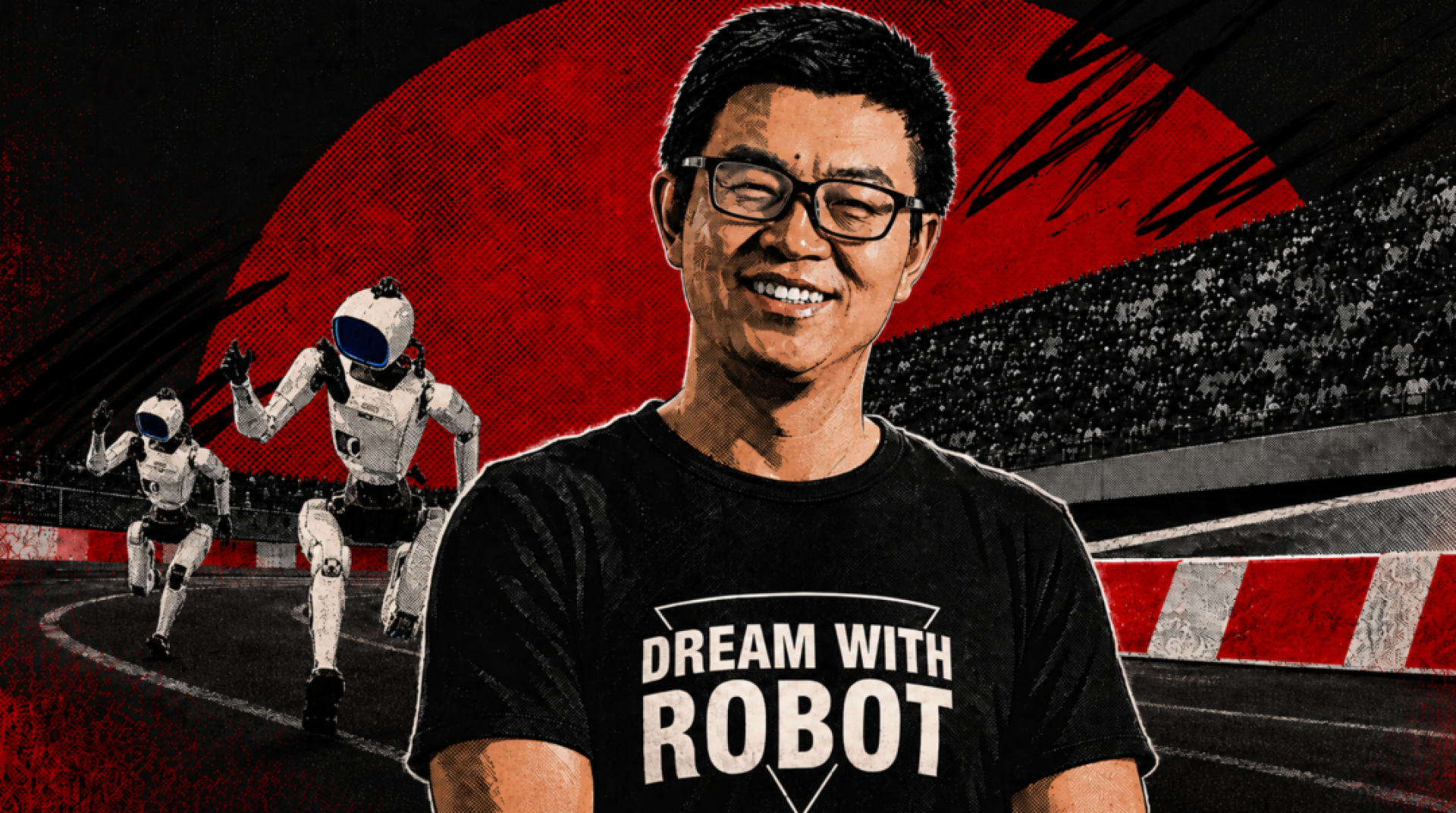
(Source: Tencent Technology; Author: Li Hailun) On August 26, the second World Humanoid Robot Games concluded at the "Ice Ribbon" in Beijing.
Compared with the first edition, humanoid robots ran faster, their movements became increasingly complex, and the tasks they could complete continued to increase. At this edition of the Games, records in multiple events, including the 100 meters, 400 meters and 1,500 meters, were substantially broken.
Many robots have thus gained attention beyond industry circles.
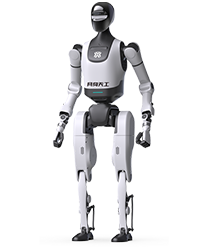
On the track, X- Humanoid’s TianGong Ultra won the 400m large-group championship in 38.15 seconds, then ran 8.64 seconds in the 100m final; TianGong Omni, which once went viral for its "shy" movements, won the 400m small-group championship in 45.66 seconds. Honor’s "Lightning" robot team, the Wind Chasers, took second place in the 400m large group, also finishing within 40 seconds.
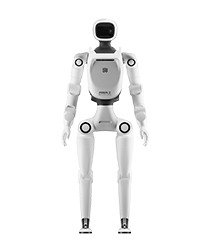
In more complex events, the challenges facing the robots are also increasing. AgiBot Lingxi X2 won the 100-meter obstacle race championship, requiring it to continuously complete obstacle avoidance, crossing and passage through narrow spaces; the rapidly evolving Booster T2 entered multi-player competitive events such as football, where the robot needs to autonomously complete positioning, coordination and real-time decision-making.
The competition also exposed some unresolved issues. After running at high speed, some robots still struggle to decelerate quickly, with some even crashing directly into the protective padding. In multi-player adversarial events such as soccer, robots’ coordination, judgment and on-the-spot reactions still fall notably short of a truly fluid match.
To some extent, this sports meet will serve as a concentrated physical examination of humanoid robot capabilities. On one hand, abilities such as speed, balance and full-body coordination are being rapidly refreshed; on the other hand, environmental adaptation, autonomous decision-making and stability in complex tasks are still being tested.
However, the race is just a capability test. Once they enter real-world scenarios such as factories, logistics and energy, robots face far more demanding tests of reliability, efficiency and cost.
In recent years, more and more robots have begun to enter scenarios such as automotive, 3C, logistics, and retail. The industry’s evaluation criteria for humanoid robots are also constantly changing, with evaluation dimensions gradually extending from single technical performance to stability, efficiency, and commercial returns.
This has also pushed competition among robotics companies to expand from single-point capabilities to entire systems. The body and motion control remain foundational, while the importance of large models, manipulation capabilities, engineering, mass production, delivery, and after-sales service is rising. Once robots truly enter production environments, a weakness in any one link can affect the final deployment outcome.
At the games, TianGong Ultra won the 400-meter large-group championship, and TianGong Omni, the "shy" champion of the 400-meter small-group category, both come from the X- Humanoid. Recently, Xiong Youjun, general manager of the center, also discussed this ongoing change in the robotics industry during an exchange with the media.
In his view, the industry used to focus more on technical parameters, but now it is paying increasing attention to a company’s "systematic capabilities": from R&D to factory-scale production, and then to customer experience and service, the demands on a company’s technological and organizational capabilities are rising.
As robots continue to set new records on the track, the industry has already begun asking the next question: once these capabilities leave the arena, how do they become stable, replicable productivity that makes economic sense?
The following is an edited transcript of Xiong Youjun’s exchange with the media:
01/When humanoid robots start calculating ROI
Q: In the past, when the industry evaluated humanoid robots, it often focused on individual parameters such as speed, payload, and degrees of freedom. This time, TianGong won multiple championships at the robot games again. As robots begin to enter real-world scenarios, what changes do you think have taken place in how the industry evaluates a robotics company?
Xiong Youjun: I think one fairly obvious change is that people used to focus more on technical parameters, but now they are paying increasing attention to a company’s systematic capabilities.
This includes both R&D capabilities and the ability to truly turn technology into products, achieve factory-based production and large-scale delivery, and further down the line, customer experience, service capabilities, and the company’s capacity for sustained development.
So for a robotics company, the challenges today are more comprehensive, with rising demands on both technological breadth and overall organizational capability.
Q: There is now skepticism both at home and abroad that humanoid robots appear to be a hot topic, but a large number of demonstrations are still concentrated in scenarios such as singing, dancing, and competitions. How do you view the relationship between these demonstrations and robots truly creating production value?
Xiong Youjun: I think truly professional people will not make excessive judgments about a robot just because it can sing and dance.
Ultimately, robots still need to serve humanity. One of their important values is to enter scenarios that people are unwilling to do or that are harmful to humans, and assist humans in completing these tasks.
Of course, singing and dancing can themselves provide a certain amount of emotional value, and there is nothing wrong with that.
The robot industry is still at a relatively early stage, and some companies’ product positioning may lean more toward stage demonstrations or performances. These products can also accumulate data and iterate during demonstration and use, laying the foundation for subsequent product capability improvements, which I think is normal.
In the long run, however, we still hope that robots can focus more on scenarios where humans truly have urgent needs, and solve real problems through continuous product iteration.
Q: More and more robotics companies are now able to enter factories and complete POCs, but projects that truly achieve sustained deployment and scale replication remain limited. Based on the scenarios you have already entered, what is the most critical change for robots to move from technical validation to industrialization?
Xiong Youjun: I think robots are only just beginning to truly enter factory practice.
One obvious change is that customers have begun to truly focus on ROI, that is, the return on investment.
I think this is actually a very important sign of the industry gradually maturing. When people begin to truly calculate input and output, it will in turn push robot companies to continuously reduce costs, improve reliability, and improve the efficiency of products and services for customers.
This requires the entire industry to jointly accelerate iteration.
Q: If humanoid robots are compared with already very mature industrial robots and automation equipment, how large is the gap in ROI at the current stage? What capabilities will mainly be needed to continue narrowing this gap?
Xiong Youjun: If we calculate ROI today, humanoid robots still lag behind traditional industrial robots by a certain margin.
But what I see is that this gap is narrowing very rapidly.
This will also prompt relevant enterprises to continuously reduce costs, improve robot reliability, and enhance the efficiency of serving customers. I believe all of this requires the entire industry to work together to accelerate the iteration of products and technologies.
Q: From TianGong 1.0 and 2.0 to the current TianGong 3.0 and Omni, you have maintained a relatively fast pace of hardware iteration. At this stage, what changes have occurred in the product definition of the TianGong platform?
Xiong Youjun: The Innovation Center currently has two major platforms: one is the TianGong hardware platform, and the other is the HuiSi KaiWu general-purpose embodied intelligence platform.
Both platforms are essentially open to the industry.
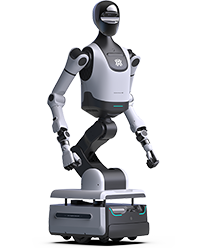
TianGong is more of a general-purpose robot platform. With the newly released TianGong Omni, we aim to provide a platform better suited for industry operations and vertical applications, while further taking into account cost, mass production and industrialization.
So from the perspective of the body platform, we will increasingly focus on the problems that need to be solved once robots truly enter the industry.
In the future, we will also invest more resources in HuiSi KaiWu, the "brain" and "cerebellum" platform for robots, hoping to provide the industry with more general-purpose capabilities in robot intelligence and control through continuous iteration.
02 / The Next Stage of Humanoid Robot Competition
Q: As more and more body, model and component companies enter this industry, standards are becoming the infrastructure for industrial scaling. At the current stage, which standards issues do humanoid robots most urgently need to resolve?
Xiong Youjun: Currently, the Ministry of Industry and Information Technology has established a relevant standardization committee and is also rapidly setting up different professional working groups to advance standards development.
The Innovation Center has also taken the lead in participating in some standards work. We are now involved in the formulation of dozens of relevant standards, including some international standards that are currently being advanced.
From the Innovation Center’s perspective, we are currently focusing on several directions.
The first is safety standards. For robots to truly enter factories, commercial scenarios, and even homes in the future, safety is a very important foundation.
The second is interface standards. Through interface standards, compatibility between different systems can be improved, and redundant development by enterprises can also be reduced.
In addition, other working groups are advancing standards in different directions. Overall, the pace of industry standards development is currently quite fast.
Q: China has now formed a relatively complete robot supply chain and a very large application market. In the next stage, is it possible to further transform the advantages of industrial scale and scenarios into the right to speak in international standards?
Xiong Youjun: This is a very important matter.
As China’s robotics industry continues to develop, these standards will, on the one hand, help Chinese companies better enter the international market, and on the other hand, enhance the influence of China’s robotics industry in the international standards system. We also have some standards that are currently being advanced toward the international level.
As China’s robotics industry continues to strengthen its own capabilities, our participation and influence in international standard-setting will further increase in the future.
Q: Recently, robotics companies have attracted significant attention in the capital market, and there have been some representative cases, such as Unitree’s IPO. How do you view the impact of capitalization on the entire industry? As a national-level innovation platform, how will the Innovation Center consider its own sustainable development in the future?
Xiong Youjun: From the perspective of the entire industry’s development, this is a good thing. People will see the future development space of this industry, and more resources may enter the robotics sector.
The Innovation Center is essentially a company and also a national-level innovation platform, undertaking certain national missions. So we must first fulfill our national missions, while also hoping the company can achieve sustainable development.
As an embodied intelligence innovation platform jointly built by national and local authorities, we must first achieve breakthroughs in core technologies and technological innovation in the early stages of industry development.
Second, we will further open up these technologies so that more enterprises and upstream and downstream companies can continue to innovate on our foundation, minimizing the need to reinvent the wheel.
Through core technology supply and platform empowerment, more Chinese robot companies can participate in international competition faster and occupy the technological high ground. I think this is what a national innovation center should do.
Q: From your observations, what substantive changes have taken place in the position of Chinese robots in the global industry over the past two years?
Xiong Youjun: I do not have specific robot export data on hand; that may still depend on customs figures. But from my own observations, there are several fairly obvious changes.
The first is in the academic field. When we attend some international conferences now, we can clearly feel that there are more and more Chinese engineers, scientific and technological workers, and university teachers giving presentations at these conferences.
Many of the technologies and platforms researched by Chinese teams are already relatively advanced in terms of depth and height within the industry. I think this actually requires a relatively strong industrial foundation to support it.
Second, in terms of cutting-edge technology research, China now also possesses strong international competitiveness. For example, in robot-related patents, China’s application volume and share are already very high.
In addition, from the perspective of industrial scale, China’s robot industry is also becoming increasingly strong in terms of supply capacity. Therefore, whether in terms of scientific research, technology, or industrial capability, the global influence of Chinese robots is continuing to rise.


 京公网安备11011202100775号